Chapter 14 · Inference cues
Read between the clues
Read visible cause and effect: reuse, stale answers, shared work, limits, state changes, and time.
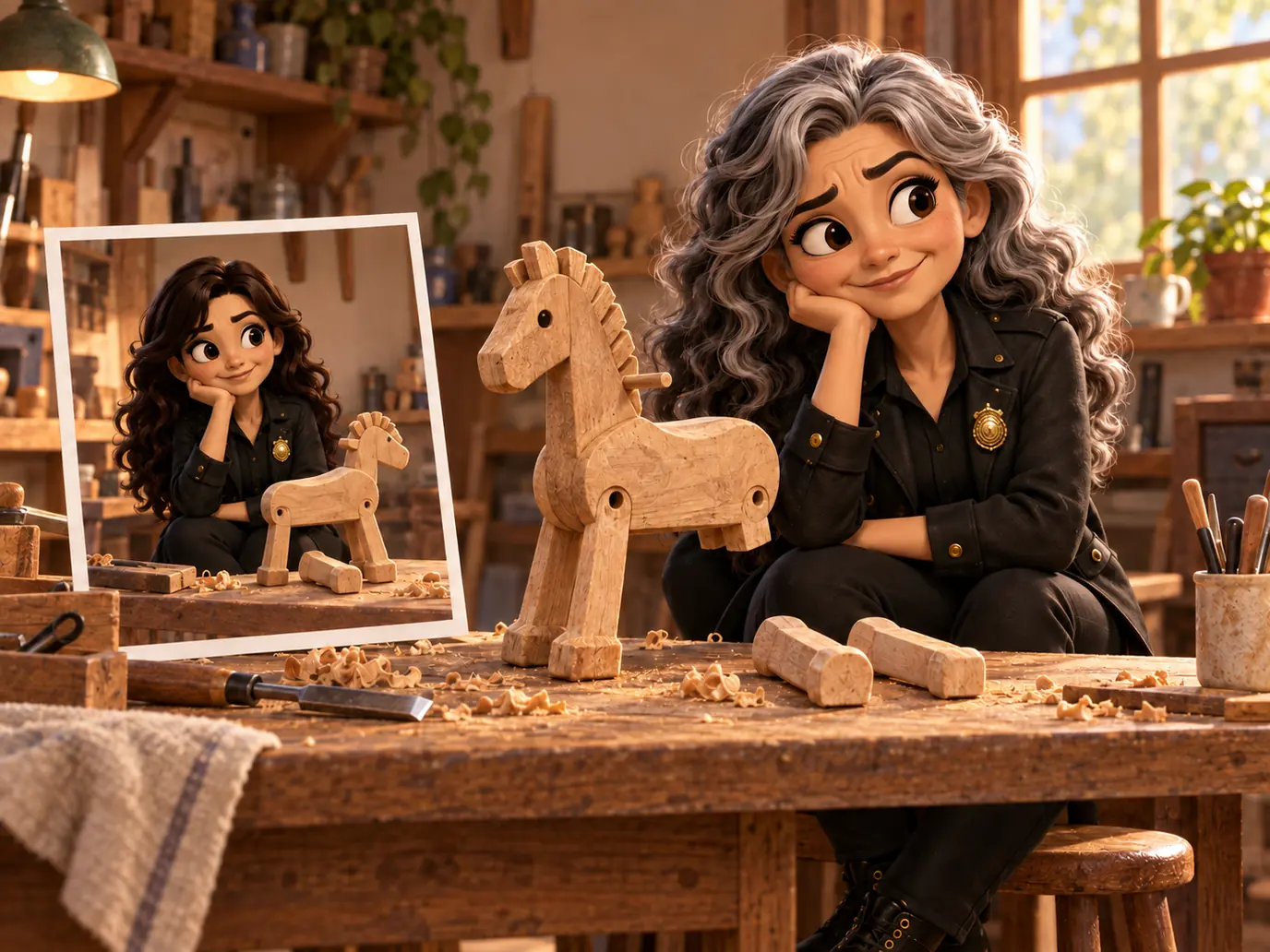
Picture path
- What does the matching younger photograph add to the unfinished scene?Match the face, curls, badge and task in both places, then compare what changed.
- Why can the detective leave the clay and tool untouched?Compare her empty shape with the finished pieces already on the dog's tray.
- Why are both people watching the same unfinished piece?Count the matching molds first, then count the jobs actually underway.
- What finally starts the work on this one piece?Follow the arriving hand to the first changed lump and compare the untouched neighbors.
- Why does the pull reach the other person's grip immediately?Trace the material between the two handles without lifting your eyes from it.
- What lets the detective recover the shape from before the bend?Compare the unchanged recess, its distinctive scalloped point, and the part being reseated.
- Why can this saved star no longer answer the current request?Compare the star first with the removed inner collar, then with the expanded recess.
- Why can neither worker finish even though both necessary tools are here?Follow what each fist holds, then what that person's other hand is waiting for.
- What must happen before the waiting parcel can be accepted?Count the usable spaces and see whether any of them is actually empty.
- What does pressing this exact finished impression again change?Look for any new mark, extra depth or changed contour after the same stamp fits again.
- Why does the neighboring star keep its shape when the first is stretched?Trace whether any shared material connects the changed object to its neighbor.
- Why can these pieces no longer authorize another prize?Match the torn edges, then compare either piece with the whole shape required by the slot.
- Can all three people each have their own seat here?Count people and count single-person seats, including whether either seat has spare capacity.
- Why do these matching outer signatures still need a closer comparison?Compare the two seals, then compare the objects hidden beneath them.
- Why are the good muffins left in place while just this one is replaced?Find the damaged result, its empty site, and the neighboring results that remain usable.
- Why does lifting this surviving handle no longer lift the intended object?Trace the handle's broken attachment points to the target that used to support them.
- Why does more pressure stop making the dough any thinner?Follow the plate's edges to the solid surfaces that now support them.
- How many boxes are needed even though the last one is only half full?Count each box's capacity, then find the item left after the first full group.
- Which part would be counted twice if you simply added both cloth totals?Follow each separate cloth through the middle and compare the number of layers there.
- What stays unchanged while one belly shrinks and the other grows?Match the missing material to the very same piece entering the other figure.
- Why is the ready bread and fruit still waiting on the tray?Compare the tray's complete set of places with the one distinct dish still being finished.
- What must the waiting worker obtain before using this same workspace?Identify the current holder, the occupied resource, and who can release its entrance.
- Why did the same two ingredients produce different candle surfaces?Decide which operation must have happened last from the icing's physical edges.
- How can the job continue after the whisk breaks?Find the failed preferred tool and the different tool now doing its actual work.
- Why has the press stopped while the clay piece is still unfinished?Trace the emptied fixed reservoir, separate filled cup, and lever touching the stopped handle.
- Why does the farther station still expose the old shape?Compare both current inserts, then find where the matching update has reached.